


News from Marilena-Consult EOOD
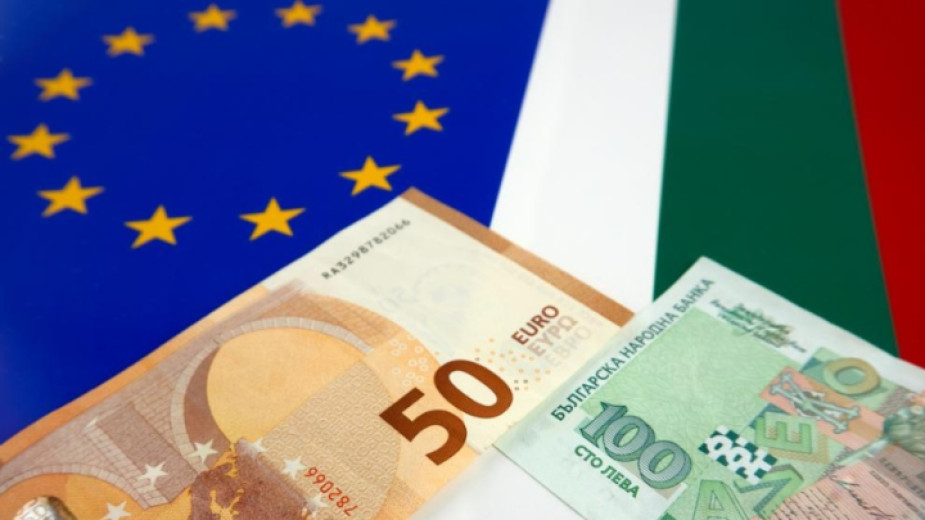
After official confirmation, that Bulgaria will adopt the euro as its national currency, many entrepreneurs began to ask themselves, “What will happen to my business?" — will the goods become more expensive, will the invoices go wrong, will the accounting software need to be changed and what exactly needs to be done, to obey the law.
These questions are completely understandable. Changing the currency is a big step for the entire economy, but the truth is, that it will be organized, fluid and aided by the state and technology.
In this article, we will look at the most important practical aspects, that affect small and medium-sized business owners, and why there is no room for concern—not even in terms of reporting, nor in terms of inflation.
Who will take care of the technical changes - You or the softwares?
One of the most frequently asked questions in recent months is: "Will I have to change anything on the invoices?", on the reporting program or in the cash register?“
The good news is, that most of these changes will not be the commitment of the traders themselves, and the software and its suppliers.
Accounting systems, invoicing, inventory and cash registers will be updated automatically, to be able to work with euros.
The state will provide the necessary guidelines and deadlines, and accounting and commercial software providers are already developing the necessary updates. That's what it means, that your consultant or accountant will make sure that the process goes without unnecessary tension.
It is important to only use licensed and supported programs. If you have been relying on outdated or free solutions until now, now is the time to consider switching to an officially certified product.
What will happen to prices and inflation?
Many small business owners are worried, that with the introduction of the euro there will be a wave of price increases and that customers will not be able to afford their goods or services.
It's the truth, that inflation at the introduction of the euro is a ubiquitous and temporary process, which simultaneously affects all participants in the economy.
In other words, if the purchase prices of the materials or goods are raised for you, the same will happen with your selling prices. This is a natural market mechanism, which is self-regulating.
The historical experience of countries like Slovakia, Slovenia, Croatia and the Baltic States shows, that the real effect on the purchasing power of the population is minimal and temporary.
At first, people feel the change due to rounding and the psychological perception of "new" prices, but the economy quickly adapted. In a few months, when everyone already thinks in euros, the tension disappears.
Prices will be displayed in both currencies
During the transition period, all merchants and companies will be required to list prices in both BGN and EUR. This will provide transparency and peace of mind for customers, but will also help the business make a smooth transition.
So there will be no "surprise" changes - everyone will clearly see how much a given item costs in both currencies.
Besides, government institutions will monitor for abuses in price rounding, to avoid speculative price increases.
Recalculation of the fixed capital - obligation until the end of 2026 Mr.
One of the specific commitments, laid down in the Law on the introduction of the euro in the Republic of Bulgaria, is related to the recalculation of the companies' share capital.
According to the law, all companies must convert their fixed capital from BGN to EUR and reflect this in the Commercial Register by the end of 2026 year.
This change will not require a new registration of the company or a change in its structure — it simply changes the nominal value of the capital, expressed in the new currency.
for example, if a firm has capital 5 000 BGN, it will be converted into euros at the fixed exchange rate, which will remain 1 euro = 1.95583 BGN.
That is, the capital will become approx 2 556 euros.
Accounting specialists and consultants, as the team of Marilena-Consult EOOD, they will be able to do this quickly, without unnecessary red tape and completely legal.
What's changing in billing and reporting
After the changeover to the euro, all invoices, accounting documents, receipts and contracts will be kept in euros.
This will happen automatically through the update of the accounting or warehouse software used.
Businesses will not have to manually recalculate the old values. The data, submitted to the National Revenue Agency, will also adapt to the new currency.
During the transition period, it will be possible to use both currencies, as the softwares will calculate the equivalents automatically at the fixed rate.
There is no need for urgent action – but there is a need for good preparation
Although the deadline for the full transition to the euro will be officially announced by the government, the time to prepare is now.
We recommend that every entrepreneur take a few simple steps:
- Check that you are using supported accounting and trading software.
If you are not sure - consult your accountant. - Check your contracts with suppliers and customers – if necessary, add currency adaptation clauses.
- Schedule a capital conversion consultation - this will be mandatory by the end of 2026 Mr.
- Inform your employees and customers – clarity and calm is the best way to avoid panic.
The psychological effect – not to be afraid of change
Many small business owners today feel insecure. We see it daily—some are even considering going out of business, because they are afraid, that "after the euro it will become more difficult".
The truth is just the opposite: the euro will facilitate trade, the payments, travel and access to European programs and markets.
Yes, there will be adaptation at first, but no one will be left to fend for themselves. All participants - country, banks, software companies and accountants – will work together, to make the transition smooth and predictable.
In conclusion: stability and perspective
The transition to the euro is a natural step on Bulgaria's path towards closer integration with Europe.
For businesses, this means fewer currency risks, easier transactions, clearer prices and more trust from European partners.
Yes, inflation will be felt, but it will be the same for all, which means, that the market will balance itself.
The key is preparation and trust in professionals, which will help the process run smoothly.
The Marilena-Consult EOOD team is available to assist you in all matters, related to the introduction of the euro - from the conversion of the capital to the updating of the accounting systems and consultations on the new requirements.
Change is inevitable, but it brings opportunities.
And when you have a competent partner by your side, as "Marilena-Consult", moving to the euro is just another step forward towards stability, predictability and growth.